People are at the centre of everything we do
Visiting the Congress Presidents of OTWorld 2028 in Magdeburg and Dresden
What does high-quality orthopaedic treatment and care require? Medical expertise, skilled craftsmanship, scientific evidence and technological possibilities are all essential. But they have the greatest impact when the professions involved bring their knowledge together. The two Congress Presidents of OTWorld 2028 are convinced of this. During visits to their workplaces in Magdeburg and Dresden, Prof. Dr med. habil. Christoph Lohmann and Thomas Mitzenheim offer insights into their work – and demonstrate the perspectives they will bring to shaping the World Congress of OTWorld, the world-leading event for modern orthopaedic treatment and care. OTWorld will take place in Leipzig from 16 to 19 May 2028.
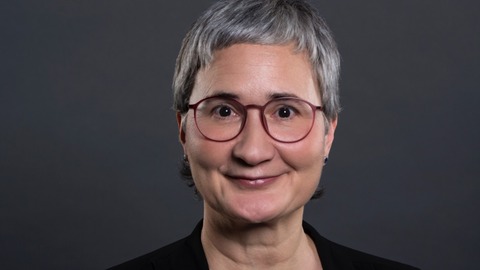
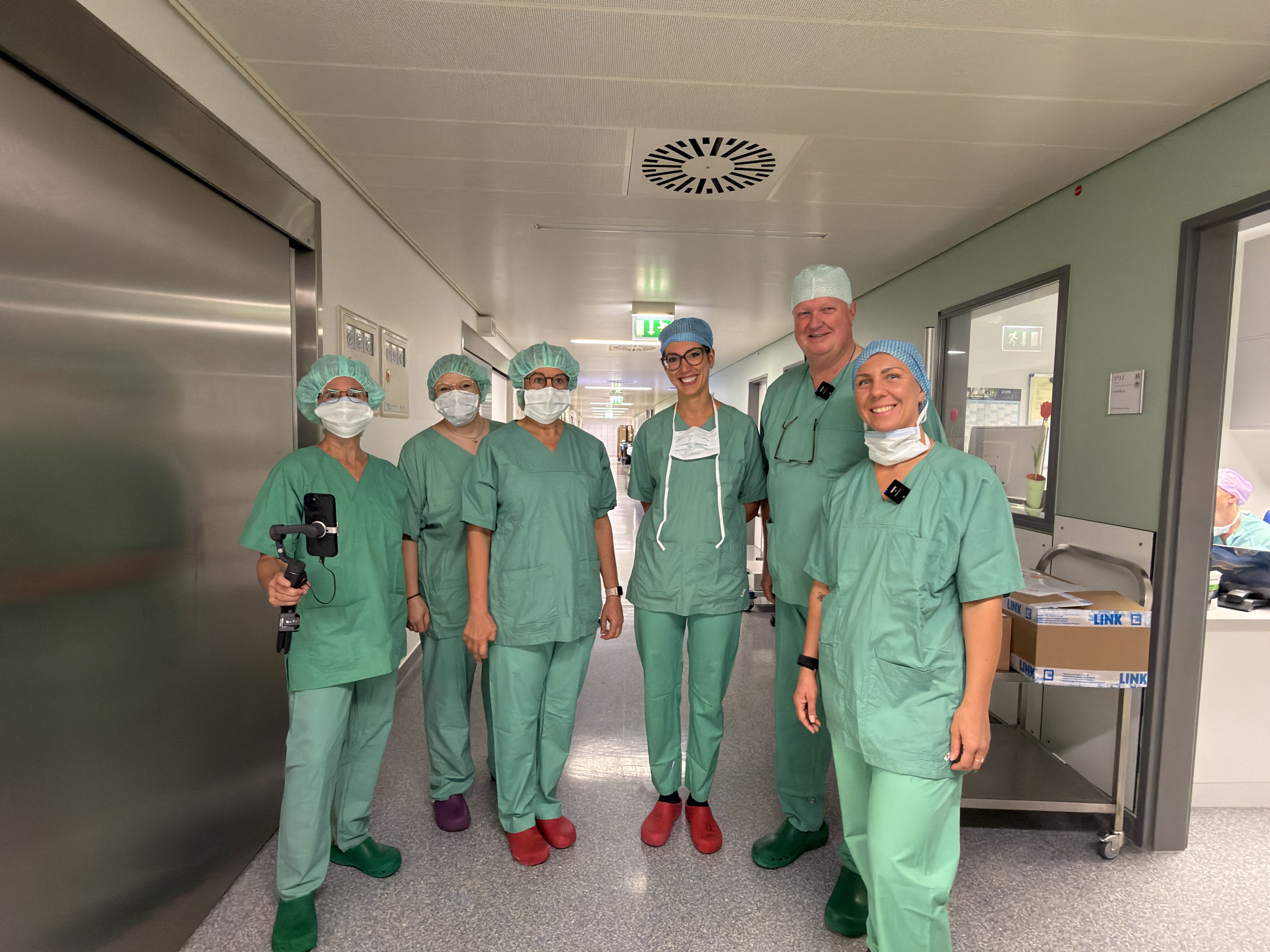
Lohmann has been Director of the University Department of Orthopaedics at Otto von Guericke University Magdeburg since 2010, where he leads a team of 89 employees. Clinical treatment and care, research and teaching are closely interconnected. The department’s spectrum ranges from joint replacement, shoulder and spinal surgery to sports and tumour orthopaedics, rheumatology and paediatric orthopaedics. New technologies are also part of everyday clinical practice: robotics and augmented reality are already being used in the operating theatre. The department is also working with wearables, digital applications in rehabilitation and the digitalisation of the patient pathway.
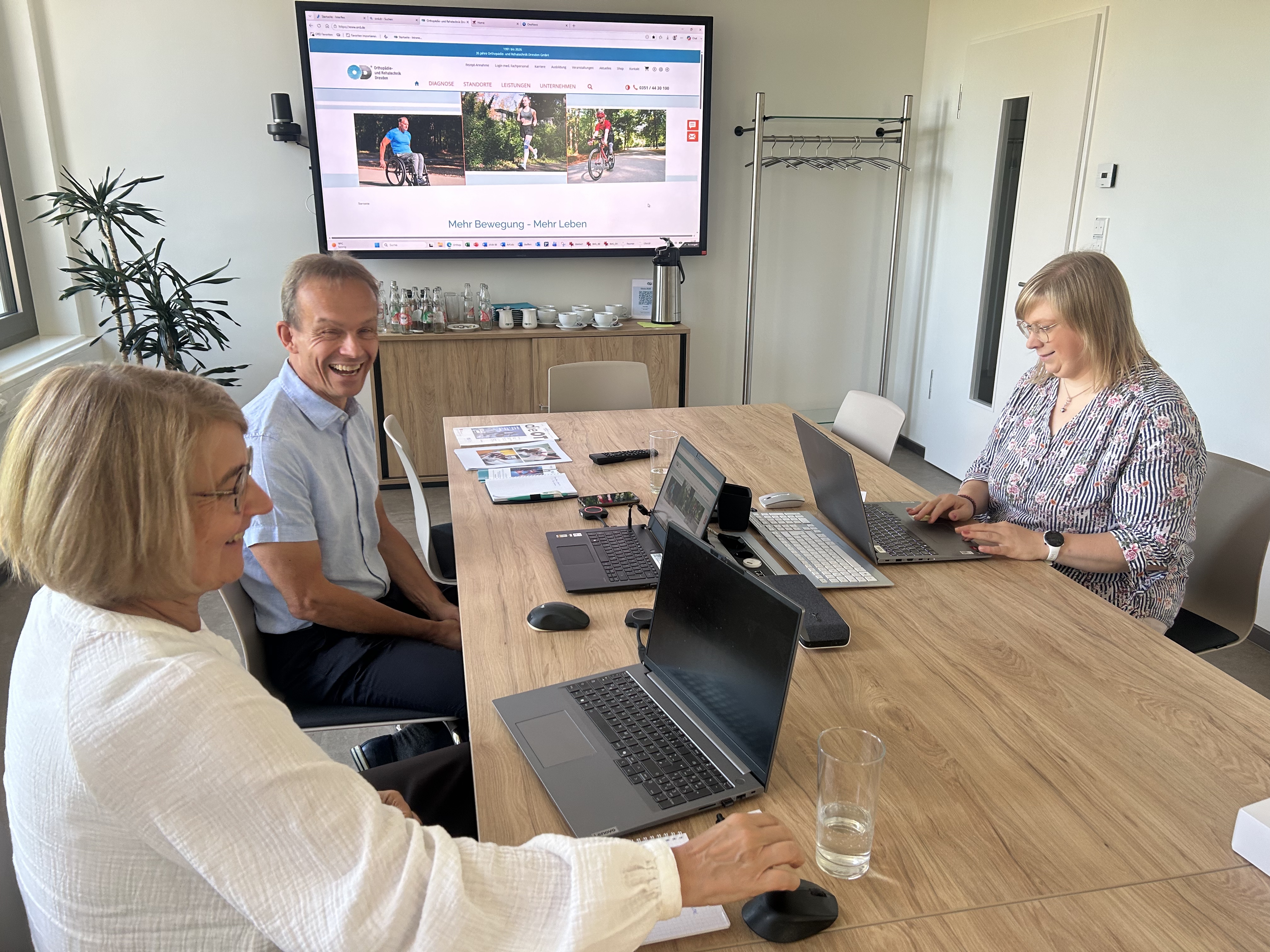
Around 230 kilometres away, Thomas Mitzenheim is Managing Director of Orthopädie- und Rehatechnik Dresden GmbH. Founded in 1991, the company now employs around 330 people at its headquarters and 14 branches across Saxony. In its workshops and treatment areas, skilled craftsmanship and modern technologies come together directly. 3D scanning, digital modelling and 3D printing have been part of everyday practice for years. Its range of treatment and care extends from prosthetics and orthotics and orthopaedic footwear technology to rehabilitation technology and homecare, as well as specialist services for children, people with venous and lymphatic disorders and those who have undergone mastectomies.
“It becomes particularly interesting when these perspectives come together”
“Our shared goal must be to provide patient-centred treatment and care,” says Lohmann. Particularly in complex cases involving medical aids, medical expertise is needed just as much as expertise in prosthetics and orthotics. Both professions view the individual from their respective professional perspectives – and to provide the best possible treatment and care, these perspectives need to come together. For Lohmann, one of OTWorld’s great strengths is therefore its ability to create a space where different professions “can exchange expertise as equal partners”.
Mitzenheim has been familiar with these different ways of thinking since his training. One sentence from his master craftsman school has stayed with him to this day: “You have to learn how we doctors think.” Doctors, Mitzenheim explains, consider the clinical condition and the therapeutic intervention required. Prosthetists and orthotists also think in terms of biomechanics and how a therapeutic goal can be translated into a technical solution. “It becomes particularly interesting when these perspectives come together.”
Mitzenheim himself first attended the event in 1991. Advanced training and exchange with other disciplines have accompanied him throughout his professional life ever since. “And it works both ways: sharing your own knowledge while remaining open to the expertise of others. That is exactly what I value about OTWorld.”
Collaboration requires a common language
For the two Congress Presidents, however, professional exchange alone is not enough. Lohmann puts it clearly: “Sending a prescription and perhaps subsequently being asked to amend it does not constitute interprofessional collaboration in my view.” Particularly in highly individual cases, direct contact is essential – human-to-human interaction: What are the individual’s goals and needs? What can be achieved medically? What is technically possible?
Medicine and prosthetics and orthotics bring different ways of thinking and their own specialist terminology. “The key is to overcome the boundaries this can create between the professions and develop a common language,” Lohmann emphasises. For him, this also means strengthening medical knowledge of technical orthopaedics and orthopaedic treatment and care in education and advanced training.
Mitzenheim takes a similar view: “For me, good collaboration starts with understanding what the other profession can do – and recognising the limits of your own.” A doctor cannot have the same detailed knowledge as a prosthetist and orthotist who has spent years learning their skilled trade. Conversely, prosthetics and orthotics cannot replace medical diagnostics or therapy. What matters is understanding enough about each other’s work to provide high-quality treatment and care together.
For Lohmann, this extends beyond collaboration in an individual treatment case. Medicine and prosthetics and orthotics face conditions that are making individual, locally accessible treatment and care increasingly challenging. “We should not discuss these issues separately. We share responsibility for ensuring that high-quality treatment and care close to people’s homes remains available in the future.”
People are at the centre of everything we do
The OTWorld World Congress deliberately extends beyond the interaction between medicine and prosthetics and orthotics. Orthopaedic footwear technology, physiotherapy and other professions also contribute their expertise. For Lohmann, interdisciplinarity therefore also means moving away from traditional hierarchies: “It is not only doctors and prosthetists and orthotists, but every profession involved in treatment and care that contributes its own specialist expertise. People are at the centre, bringing together all these different areas of expertise.”
Mitzenheim illustrates what this collaboration can look like in practice using the example of prosthetics and orthotics and physiotherapy. “In theory, there is broad agreement about the importance of interdisciplinary collaboration. But it also has to be put into practice in everyday treatment and care. Sometimes a brief phone call can make a crucial difference.” If, for example, a physiotherapist needs information about which movements are possible with a particular prosthetic knee joint, direct contact is often more helpful than written correspondence. Conversely, feedback from therapy helps the prosthetist and orthotist understand where someone is still experiencing difficulties in everyday life or during training.
For Lohmann, collaboration between the professions also creates opportunities to explore new approaches together in research and development and in the use of new technologies. Particularly in view of the shortage of skilled professionals, there needs to be discussion about where digital tools can provide meaningful support and reduce workloads. But for Lohmann, there is a clear limit: “There is one thing we must not allow to happen: a loss of quality.”
Together with the Programme and Workshop Committee, Lohmann and Mitzenheim will shape the World Congress 2028 over the coming months. The aim is not simply to bring different professions into dialogue. Their exchange should also generate ideas for how collaboration in orthopaedic treatment and care can be further improved in the future.
Mitzenheim sums up his ambition for OTWorld 2028: “For me, OTWorld will be successful if the different professions do not simply talk to one another at the event, but work differently together afterwards. My ambition as Congress President is clear: from meeting to collaboration.”
As the world-leading event for modern orthopaedic treatment and care, OTWorld brings together experts from medicine, skilled trades, therapy, science, research and industry. Its unique combination of the World Congress and international trade show creates a platform for professional exchange, knowledge transfer and new ideas for treatment and care. OTWorld 2026 brought together 21,400 trade visitors from 92 countries, 623 exhibitors from 41 countries and more than 300 international speakers.
The Congress Presidents in conversation
Find out more about their perspectives on interdisciplinary collaboration and the future of orthopaedic treatment and care:
→ Prof. Dr Christoph Lohmann: “People are at the centre of everything we do”
Further information
Pressemeldung zum Download (DOCX, 100 kB)
OTWorld on the Internet:
#OTWorld2028
#50years50voices