From meeting to collaboration
Three questions for Thomas Mitzenheim, Congress President of OTWorld 2028
Medicine and prosthetics and orthotics approach treatment and care from different perspectives. For Thomas Mitzenheim, Managing Director of Orthopädie- und Rehatechnik Dresden GmbH, this is precisely where their strength lies. Together with Prof. Dr Christoph Lohmann, he will serve as Congress President of OTWorld 2028. In this interview, the master prosthetist and orthotist explains what the professions can learn from one another and why professional exchange must lead to collaboration in everyday treatment and care.
1. Few events represent the close collaboration between prosthetics and orthotics and medicine as strongly as OTWorld. What do you personally value about working with doctors?
Thomas Mitzenheim: When I was at master craftsman school in Eisenberg, a doctor repeatedly told us: “You have to learn how we doctors think.” That sentence has stayed with me. Medicine and prosthetics and orthotics approach treatment and care from different perspectives. Doctors consider the clinical condition and the therapeutic intervention required. As prosthetists and orthotists, we also think in terms of biomechanics and consider how the therapeutic goal can be translated into a technical solution. It becomes particularly interesting when these perspectives come together.
For me, that is exactly what OTWorld is about. I attended my first event in 1991, when my boss at the time took me to ORTHOPÄDIE + REHA-TECHNIK in Berlin. Advanced training has shaped my professional life ever since. Qualifying as a master craftsman in 1994 and completing my Bachelor’s degree in Business Management in 2011 were just two milestones – in reality, I have never stopped learning.
And it works both ways: sharing your own knowledge while remaining open to the expertise of others. That is exactly what I value about OTWorld.
2. Where do you see collaboration between medicine and prosthetics and orthotics already working particularly well today – and where do you see further potential?
Mitzenheim: For me, good collaboration starts with understanding what the other profession can do – and recognising the limits of your own. A doctor cannot have the same detailed knowledge as a prosthetist and orthotist who has spent years learning their skilled trade. Conversely, we cannot replace medical diagnostics or therapy. But we need to understand enough about each other’s work to provide high-quality orthopaedic treatment and care together.
Levels of expertise vary considerably. Doctors who regularly deal with orthopaedic treatment and care often have a good understanding of the possibilities offered by medical aids and how they work. In other areas, there is still room for improvement. Since specialist training in orthopaedics and trauma surgery was merged in 2005, for example, technical orthopaedics has played a smaller role in medical education and advanced training. When it comes to treatment and care following breast surgery or compression therapy, there should likewise be at least a basic understanding of the possibilities offered by orthopaedic treatment and care. I see considerable potential here for joint advanced training.
So rather than debating which profession knows something better, we should bring our expertise together. What matters is that knowledge comes together where it is needed most – with the patient.
3. Alongside prosthetics and orthotics and medicine, orthopaedic footwear technology, physiotherapy and other professions also play an important role in the World Congress. What is the value of bringing so many disciplines into dialogue at OTWorld?
Mitzenheim: In theory, there is broad agreement about the importance of interdisciplinary collaboration. But it also has to be put into practice in everyday treatment and care. Sometimes a brief phone call can make a crucial difference. If, for example, a physiotherapist needs to know which movements are possible with a particular prosthetic knee joint, direct communication is often more helpful than any amount of written correspondence. At the same time, feedback from therapy helps the prosthetist and orthotist understand where a patient is still experiencing difficulties in everyday life or during training.
This kind of communication should become much more routine. In practice, it still often depends on the personal commitment of individuals and on established networks. For me, OTWorld will be successful if the different professions do not simply talk to one another at the event, but work differently together afterwards. My ambition as Congress President is clear: from meeting to collaboration.
Captions:
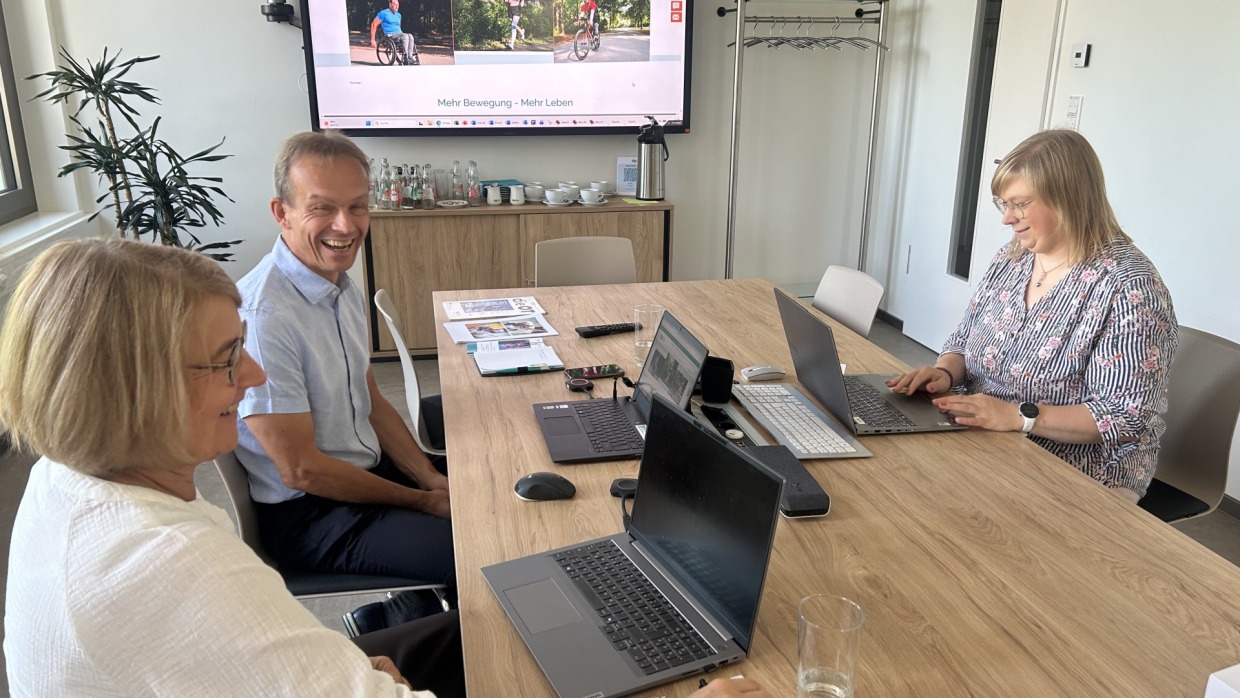
Fig. 1: Which topics should shape the OTWorld World Congress 2028? Congress President Thomas Mitzenheim (centre) in discussion with Antje Feldmann (left) and Sahra Iking (right, both Confairmed GmbH) at Orthopädie- und Rehatechnik Dresden GmbH in August 2026.
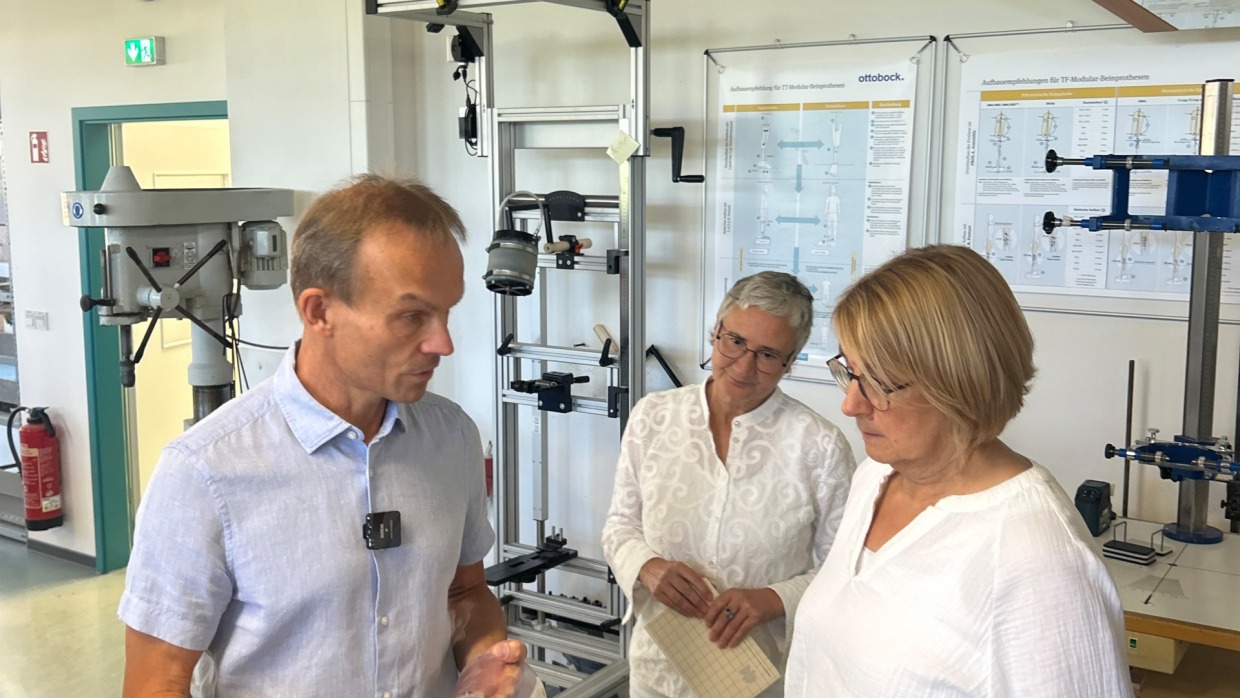
Fig. 2: A close-up look at prosthetics and orthotics: during a tour of Orthopädie- und Rehatechnik Dresden GmbH, Congress President Thomas Mitzenheim (left) explains the manufacture of an orthosis to Ruth Justen (centre, BIV-OT) and Antje Feldmann (right, Confairmed GmbH).