Humanoid robots at OTWorld: How AI and robotics are transforming healthcare
Humanoid robots, a robot dog for the emergency services, AI assistance and digital therapy solutions: OTWorld 2026 will feature a spotlight on how new technologies are transforming healthcare. Innovations from Saxony, including Leipzig and Dresden, will also be on display. Anyone interested in the topic will find concrete insights not only at the trade show but also at the World Congress.
When future technologies arrive in healthcare
Artificial intelligence and robotics are currently shaping many debates about the future of healthcare. At OTWorld 2026, this topic takes concrete form: in the spotlight “Robotics + AI”, trade visitors will experience how modern assistance systems, humanoid robots and intelligent technologies can support work processes, complement therapies and open up new fields of application in healthcare, training and everyday life.
The exhibition will feature practical applications, interactive formats, short talks and live demonstrations. The spotlight is integrated into the OTWorld.education + research exhibition area in Hall 1.
Bringing medical innovations from Leipzig into healthcare more quickly
A new driving force in the spotlight is the MITCenter, a joint project between Leipzig University Hospital and the University of Leipzig. The centre’s aim is to transfer medical innovations more quickly from research into real-world healthcare. To this end, the MITCenter closely links clinics with the medical industry and supports new health technologies from clinical trials through to market readiness.
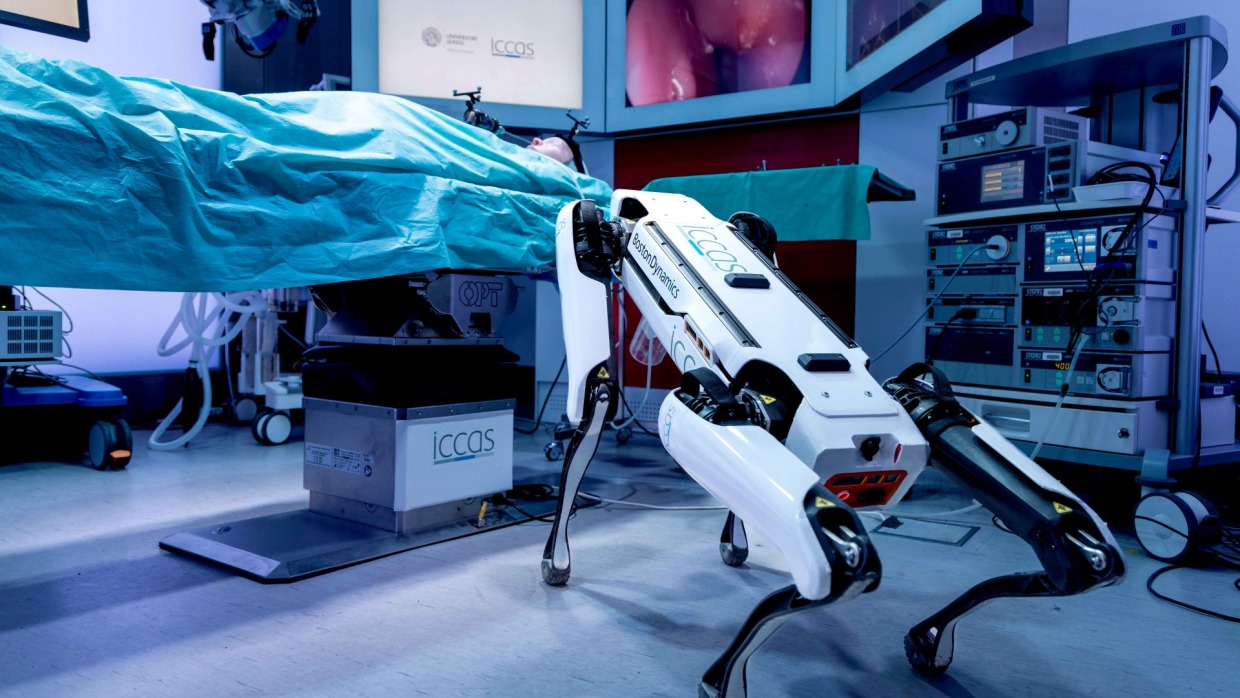
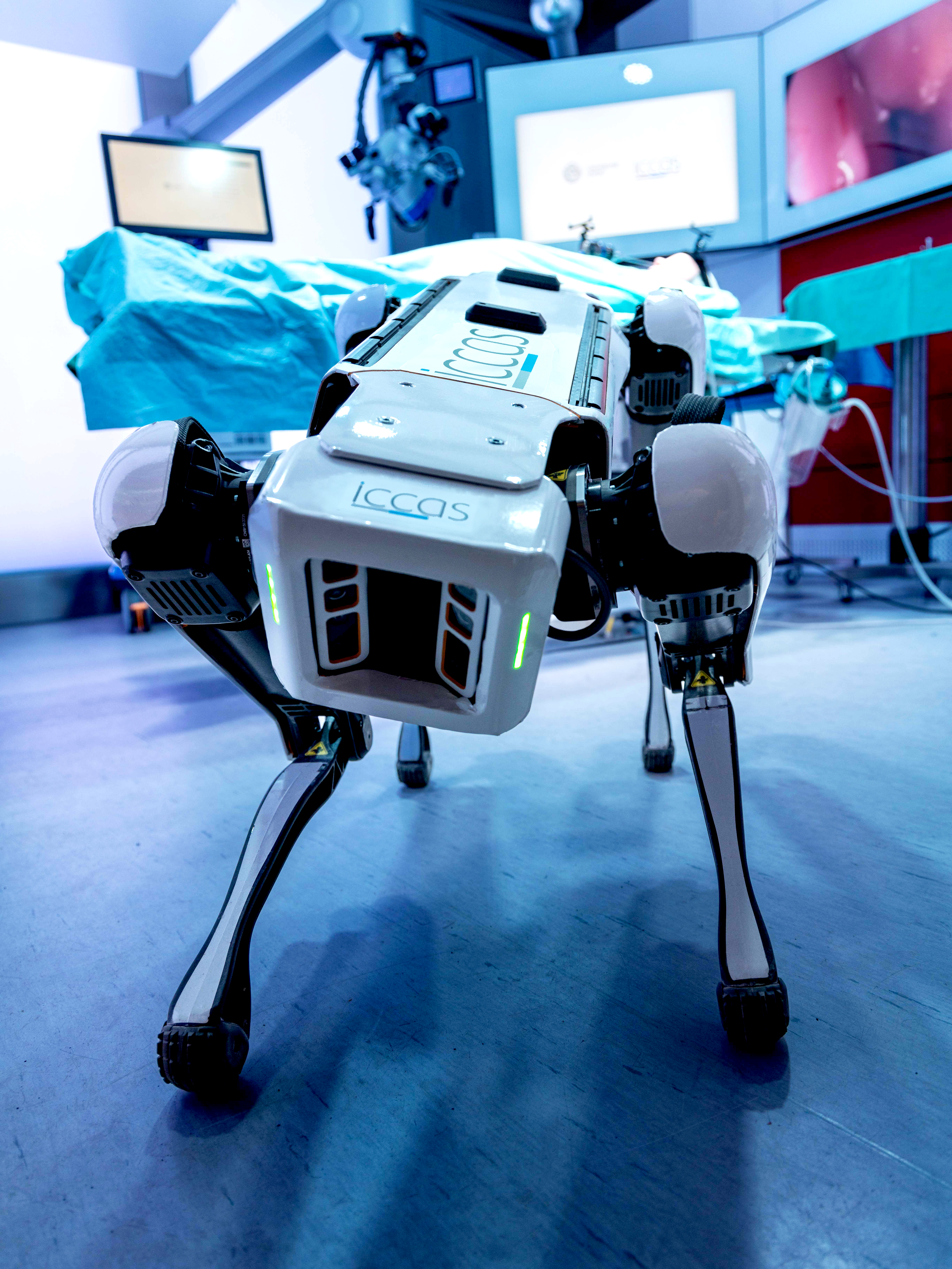
At OTWorld, the MITCenter will demonstrate what this transfer concept stands for: innovations that do not remain in the laboratory, but are tested under real-world conditions and brought into clinical practice. Among the planned exhibits is the SPOT robot dog, which can be deployed by emergency services when assessing dangerous situations. Also on display at the exhibition will be flexible robotic arms that could in future be used for procedures in hard-to-reach areas from inside the body – for example, via natural body orifices.
Robotics from Leipzig for therapy and diagnostics
Another exciting example is TEDIRO. Based in Leipzig and Ilmenau, the company develops healthcare apps for mobile service robots, which are also set to be used on humanoid robots in the future. These include, among other things, an application for gait training using forearm crutches. According to the company, the robot equipped with this technology is the first autonomously navigating therapy robot to be certified as a medical device.
At OTWorld, TEDIRO is presenting a robot that demonstrates how AI-assisted image analysis and therapeutic expertise can work together. The THERY platform is geared towards applications for therapy and diagnostics. Already available are THERY UAG for gait training using forearm crutches and THERY GO for assistive-device-independent gait training. Both applications document results throughout the course of therapy, thereby laying the foundation for digital therapy and diagnostic processes.
From 3D prototyping to digital hand rehabilitation
Further contributions to the spotlights demonstrate just how broad the field of digital innovation has become. The Saxon company leap:up is bringing its expertise in 3D prototyping and product development to the healthcare sector. Together with the Dresden-based start-up HFD-Weber, it becomes clear how digital development, diagnostics and patient-centred applications can come together.
The Weber hand and finger dynamometer represents an approach that combines diagnostics and training. It is being developed by Constanze and Cornelius Weber from Dresden. The system measures the strength of individual fingers as well as the entire hand and displays the results digitally. This allows progress to be documented in a transparent manner – in hospitals and clinics, and in the future also in the home environment.
hAIppokrates from GREENBAY healthcare also represents an AI assistant for clinical knowledge. The Leipzig-based company is developing a solution that helps medical professionals to efficiently analyse large volumes of digitally available instructions and recommendations for action and make them available via a chat interface. The aim is to facilitate decision-making whilst reducing administrative burdens.
A key theme at the World Congress too
Those attending OTWorld who are interested not only in specific applications at the trade show but also in the background, opportunities and limitations of digital technologies will find relevant content at the World Congress as well.
A symposium on digital innovations in healthcare will take place on Wednesday, 20 May, from 10:30 to 11:45 am in Room 3, Congress Center OTWorld (CCO), Hall 3. The focus is on digital tools that can make care and rehabilitation more personalised, efficient and often more motivating. Topics include digital health applications as aids in rehabilitation, AI in gait analysis and prosthesis fitting, augmented and virtual reality in rehabilitation, and teleconsultations for interdisciplinary collaboration.
A further symposium entitled “AI and Digitalisation in Rehabilitation – Opportunities and Risks” will follow on Friday, 22 May, from 10:30 am to 11:45 am in Room 2, Congress Centre OTWorld (CCO), Hall 3. This will address the practical application of new technologies in rehabilitation, whilst also exploring where the limits lie and how new possibilities can be meaningfully integrated into existing processes. The programme includes topics such as robotics in movement therapy, AI-supported documentation and therapy decision-making, smart living, and AR/VR in pain visualisation and rehabilitation.
Where the topic comes to life at OTWorld
For anyone with a specific interest in AI, robotics and digitalisation, it is therefore well worth taking a look at both sides of OTWorld: the ‘Robotics + AI’ spotlight in the exhibition area, as well as the relevant symposia at the World Congress.
This provides a comprehensive picture of how digital technologies are already transforming care, training and everyday working life – from robotics in emergency services, therapy and diagnostics, through AI in gait analysis and documentation, to AR/VR and telemedical collaboration.